Tuesday, April 5, 2016

Overview

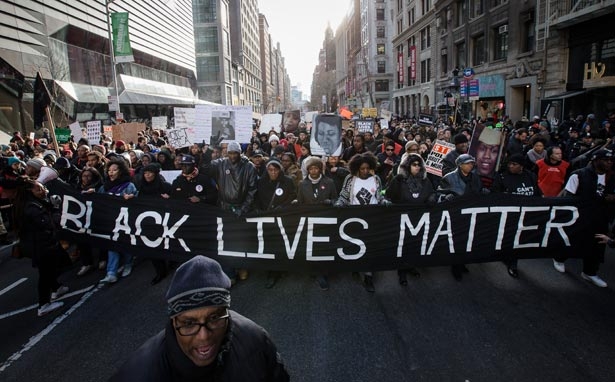
            Since the dawn of European settlement in America, the institution of slavery was present and the racial suppression slavery fostered became deeply entrenched in American society. Following the Civil War and Reconstruction, Americans in the South found it difficult to eliminate their patterns of racially fueled discrimination and to create lasting changes on the path towards equality. The Civil Rights Movement of the 1950s and 1960s was a culmination of the hundreds of years of racial tension and prejudice that was present in America. African Americans were tired of being treated as second-class citizens and unworthy of the protection of their government, so they joined together to protest for their basic freedoms as American citizens. In today’s society, it appears as history is repeating itself, as media coverage is highlighting instances of police brutality targeted at African Americans. Innocent African American victims like Trayvon Martin and Michael Brown prompted the creation of the Black Lives Matter movement, which is working to highlight and remedy instances of racial discrimination present in America today. The Black Lives Matter Movement parallels the purpose of the Civil Rights Movement when African Americans turned to protest and relied on media attention in order to affect lasting change. The history of racial discrimination against African Americans is long and violent, and the rise of the Black Lives Matter movement in recent years suggests that the issues presented during the Civil Rights Movement were never truly resolved.

Source: denverlibrary.org, Selma March

Source: crisismagazine.com

The Origins of the Civil Rights Movement


The issues of the racial disparity that existed in American society, which culminated in the twentieth century Civil Rights Movement, can be traced back to the failures of the policies of Reconstruction following the Compromise of 1877. Union armies left the South following the Compromise of 1877, allowing white supremacist Redeemer governments to slowly reestablish themselves.[1] Through the period of the 1870s-1890s, the Redeemer governments created segregated schools, disfranchised black voters, and lynched any African Americans who tried to protest these issues.[2] These discriminatory policies were contested in court, and the decision of Plessy v. Ferguson created a legal precedent for the principle of “separate but equal,” which determined “that separate facilities for blacks and whites satisfied the Fourteenth Amendment so long as they were equal.”[3]

Source: supremecrtcases.weebly.com

Source: https://i.ytimg.com/vi/B3FwHkFRs1E/hqdefault.jpg

Select African American intellectuals emerged during this early period of discrimination, like Booker T. Washington, W.E.B. Du Bois, and Marcus Garvey, and advocated different policies to eliminate racial inequality. However, no politicians would lend support to African American movements, as no politician was eager to re-fight the Civil War.[4] This period of political inaction continued up until World Wars I and II, which created an especially discontent feeling among African Americans. World War I was targeted at promoting democracy abroad, yet it left the black population of the South disfranchised. World War II was targeted at fighting Hitler, a fascist dictator, yet the violent leaders in place in the American South remained.[5] The lack of political action following World Wars I and II inspired blacks to unify and create the National Association for the Advancement of Colored People (NAACP), which would work tirelessly to legally bring to light the injustices that African Americans faced daily in American society.

Source: emaze.com
                                                          
Source: http://13freckerwwii2c.wikispaces.com/file/view/images.jpeg/462407280/images.jpeg


1. Mark Carnes and John Garraty, The American Nation Volume II, (New York: Pearson, 2016), 369-72.
2. Mark Carnes, “The Rise of the Civil Rights Movement,” (lecture, American Civilization Since the Civil War, New York, NY, March 30, 2016).
3."Plessy v. Ferguson," Chicago-Kent College of Law at Illinois Tech, Oyez, April 5, 2016, https://www.oyez.org/cases/1850-1900/163us537.
4. Mark Carnes, “The Rise of the Civil Rights Movement,” (lecture, American Civilization Since the Civil War, New York, NY, March 30, 2016).
5. Ibid.

George McLaurin and Linda Brown

Source: findingdulcinea.com, Thurgood Marshall

        Thurgood Marshall served as a lawyer for the NAACP and worked to highlight the social injustices that African Americans faced through the legal segregation systems in place in the South. One of the particularly important cases Marshall argued was of George McLaurin, an African American student who applied to a doctoral program at the University of Oklahoma in 1948.[6] The University of Oklahoma admitted him, but only on the grounds that he take his classes in a separate section of the classroom, away from all of the other students. In addition to creating a separate restroom for McLaurin, he was also segregated from the white students while in the cafeteria and at sporting events. McLaurin brought his case to the Supreme Court in George W. McLaurin v. Oklahoma Board of Regents for Higher Education, and in 1950 the Supreme Court ruled that the segregated environment “handicapped him in the pursuit of effective graduate instruction.” This decision created great strides for the NAACP’s cause because the decision started to break down the fundamental logic of legal segregation. The principle of “separate but equal” was now in question.

Source: splittingskulls.com, George McLaurin

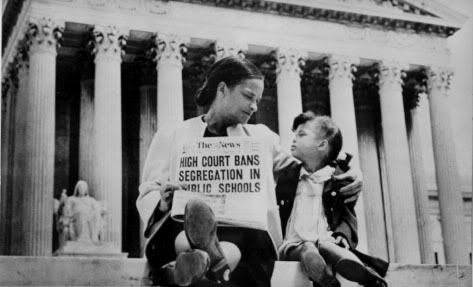
            The 1952 case of Brown v. Board of Education of Topeka was another influential case for the cause of the NAACP. This case centered around third-grader Linda Brown, who was forced to attend an all black elementary school, instead of being allowed to attend the white school that was much closer to her home.[7] Under the legal precedence established in Plessy v. Ferguson, the segregation of schools was legal, as long as the physical facilities provided equal accommodations. However, Thurgood Marshall argued using evidence from psychological studies that separate facilities between races caused feelings of humiliation for black students, and ultimately harmed the black students’ ability to learn. In 1954, the Supreme Court decided to overturn the decision of Plessy v. Ferguson, and in turn established that the principle of “separate but equal” was fundamentally unequal.[8] This decision called for the elimination of segregated schools under federal law, but there was no way the Supreme Court to enforce this decision. Although the NAACP had achieved a legal victory through Brown v. Board of Education, lasting social changes were not immediate.

Source: xroads.virginia.edu, Linda Brown


Source: dailykos.com, Linda Brown


6. “George McLaurin,” ou.edu, last modified December 13, 2011, http://www.ou.edu/gradweb/about/history/history_1909_2009/george_mcLaurin.html
7. Brown v. Board of Education of Topeka (1)," Chicago-Kent College of Law at Illinois Tech, Oyez, April 5, 2016, https://www.oyez.org/cases/1940-1955/347us483
8. Ibid.

The Rise of Martin Luther King, Jr.

Source: tikkun.org

In the 1950s, it was becoming apparent that the NAACP was failing at enacting actual social changes, which caused the rise of protest movements in the South. Protest movements quickly gained support from local churches and from the majority of African Americans in the South. The young preacher, Martin Luther King, Jr. unified local protests movements and created a national platform, which advocated for nonviolent civil disobedience, drawing on the influence of Mahatma Gandhi’s philosophies.[9] The tactics of the Civil Rights Movement under the leadership of King began to gain traction with media attention, as the media highlighted the most brutal forms of injustice committed by white police officers and white civilians against African American protestors. African American protestors staged lunch sit-ins, marches at government buildings, and boycotts on local merchants through the Birmingham Campaign.[10] This nonviolent resistance was met with excessive amounts of brutality, including the use of fire hoses and vicious dogs on protestors. Images of these violent tactics to subdue the peaceful protests rapidly spread throughout nation, which lent greater popular support for the Civil Rights Movement.[11]
Source: wikimedia.org, Birmingham Campaign, 1963

Source: tumblr.com, Birmingham Campaign, 1963

Source: YouTube.com, Birmingham Campaign (Footage)


9. Mark Carnes and John Garraty, The American Nation Volume II, (New York: Pearson, 2016), 638-42.
10. “The Birmingham Campaign,” pbs.org, last modified January 4, 2011, http://www.pbs.org/black-culture/explore/civil-rights-movement-birmingham-campaign/#.VwQC33j89US
11. Ibid.

The Civil Rights Movement in Modern Times

Although many legal strides were made at the close of the Civil Rights Movement with the passing of the Civil Rights Act in 1968, which established equal housing rights for blacks, there are still many lasting social issues that have discriminatory echoes.[12] Today, many cases of police brutality against African Americans have caught international attention. Cases like Trayvon Martin’s and Michael Brown’s, demonstrate the reality of racial profiling in modern day society and inspired the Black Lives Matter movement. According to the Black Lives Matter’s website, the purpose of the organization is to bring to light violence “in which Black people are intentionally left powerless in the hands of the state. We are talking about the ways in which Black lives are deprived of our basic human rights and dignity.”[13] This statement resonates with the initial purpose of the Civil Rights Movement. Basic rights to attend the school that one wanted to, to eat where one wanted to, to sit on a bus wherever one wanted to, or to drink from a water fountain were all gradually eliminated following the end of Reconstruction. The Civil Rights Movement aimed to reinstate these rights through legal means, yet remnants of prejudice against African Americans in society still remain. Recent protests after instances of police brutality against African Americans echo the movements that occurred in the American South during the Civil Rights Movement. African Americans today are fighting against racial profiling and discriminatory practices used by the police, just like African Americans of the 1950s and 1960s were fighting for their right to be equal members of American society.

Source: CNN.com
                                        
The issues that prompted the Civil Rights Movement stretched back in origin to the events of Reconstruction and today the platform of the Black Lives Matter movement still resonates with these racial issues. The issues of racial inequality in America are complicated due to the lack of effective political action over a period of hundreds of years. The fact that we are still dealing with racial issues today speaks to the lack of effective action that was taken during these critical moments of transition in American society like Reconstruction and the Civil Rights Movement.

Source: University of Alabama Student Media

Source: thefederalistpapers.org


12. “Fair Housing Act of 1968,” history.com, published 2010, http://www.history.com/topics/black-history/fair-housing-act
13. “About the Black Lives Matter Network,” blacklivesmatter.com, published 2013, http://blacklivesmatter.com/about/

Monday, April 4, 2016

Bibliography


“About the Black Lives Matter Network.” Blacklivesmatter.com. Published 2013. http://blacklivesmatter.com/about/
"Brown v. Board of Education of Topeka (1)." Chicago-Kent College of Law at Illinois Tech. Oyez. Last accessed April 5, 2016. https://oyez.org/cases/1940-1955/347us483.
“The Birmingham Campaign.” Pbs.org. Last modified January 4, 2011. http://www.pbs.org/black-culture/explore/civil-rights-movement-birmingham-campaign/#.VwQC33j89US
Carnes, Mark. “The Rise of the Civil Rights Movement.” Lecture for American Civilization Since the Civil War, New York, NY, March 30, 2016.
Carnes, Mark and John Garraty. The American Nation Volume II. New York: Pearson, 2016.
“Fair Housing Act of 1968.” History.com. Published 2010. http://www.history.com/topics/black-history/fair-housing-act
“George McLaurin.” Ou.edu. Last modified December 13, 2011.  http://www.ou.edu/gradweb/about/history/history_1909_2009/george_mcLaurin.html

"Plessy v. Ferguson." Chicago-Kent College of Law at Illinois Tech. Oyez. Last accessed April 5, 2016. https://www.oyez.org/cases/1850-1900/163us537.